
From OCR to IDP: How Organizations Automate Document Processing and What to Choose in 2027
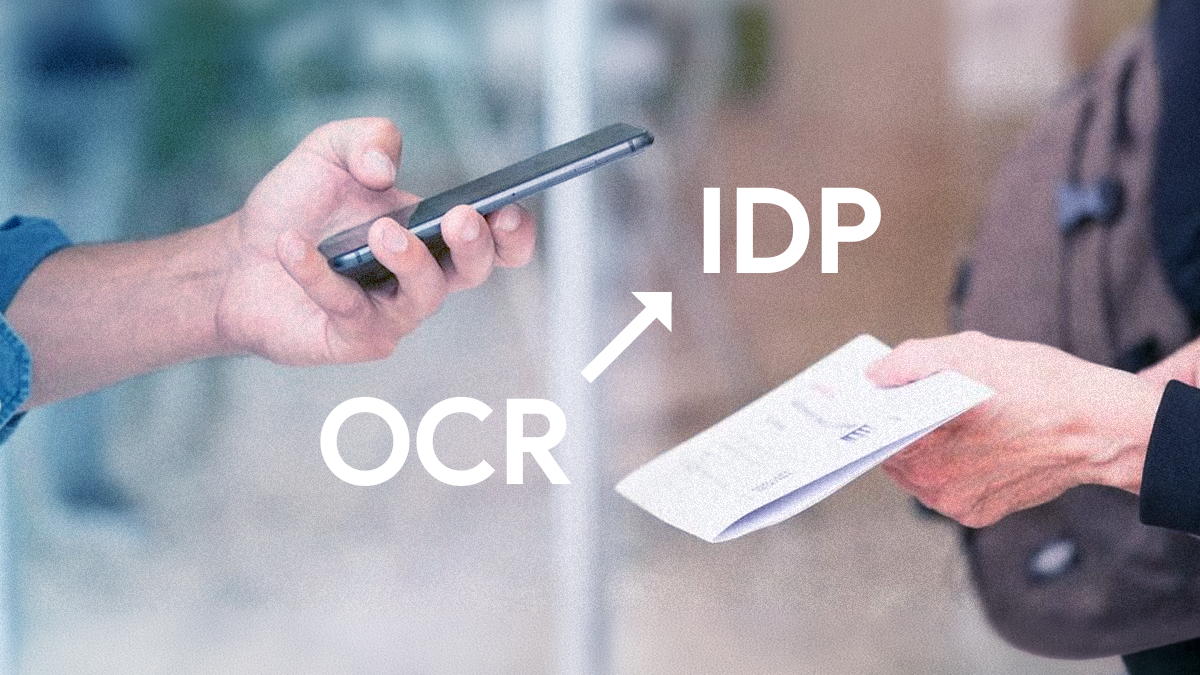
Integrating AI solutions for processing and systemizing documents is one of the main technological trends in the corporate and public sectors. The evolution of artificial intelligence has fundamentally changed the approach to automation: the focus has shifted from classic optical character recognition (OCR) to intelligent document processing (IDP) using generative AI. These tools allow businesses to instantly transform an ordinary scan or photo of a document into ordered, logically structured information. The practical experience of the Wise IT team shows that organizations are increasingly choosing solutions based on generative AI not only for analyzing text already read from an image, but also for direct recognition in photos and document scans.
Are classic character recognition technologies still relevant? How much does it cost to develop and maintain an AI data processing system? Which specific solution will be optimal for your project? — We unpack this in this article.
A new trend in Wise IT projects
Wise IT’s practical expertise has been enriched with new IDP case studies:
1. NovaPay
Challenge: One of the key stages of the customer identification process when making financial transfers or receiving packages at post offices was manual entry of passport and TIN data by operators. The process took 1 to 2 minutes, which during peak hours could increase customer service time. Additionally, the process was complicated by “noisy” data factors: documents were often photographed at an angle, with glare from gloss, or under low light conditions, while old-style booklet passports contained illegible handwritten text.
Solution: A joint team from NovaPay and Wise IT developed an architecture based on Google Cloud and Gemini AI, which reduced document processing time from 1–2 minutes to 3–5 seconds with an initial recognition accuracy of 85% and ensured reliable data protection.
2. Ukrainian state enterprise
Challenge: The organization was looking for a partner to automate workflow with documentation. The main task was the recognition and systematization of scanned copies of complex engineering design documentation with minimal human involvement and zero risk of data leakage.
Solution: Wise IT developed an application that uses the Gemini 1.5 Pro model. The enterprise’s specialists adapted the solution to meet strict internal cybersecurity requirements. The system dramatically accelerated the digitization of archival engineering diagrams and drawings, delivering high recognition accuracy and automatic data structuring in the enterprise’s local database.
Recognition efficiency: Classic OCR vs AI
A direct comparison between traditional OCR and generative artificial intelligence is somewhat conventional. Modern OCR services already incorporate machine learning algorithms, and AI systems often combine a whole set of tools. However, the fundamental approach and tasks of these technologies differ: OCR is responsible for converting image pixels into text characters along with their coordinates, whereas AI is capable of understanding context and outputting already organized data in the required structure.
1. OCR
This technology detects text blocks in an image, returning the found characters and their spatial position. To transform this mass into useful information, engineers have to write explicit algorithmic rules, regular expressions, or templates tied to coordinates.
- Advantages: High processing speed, minimal latency, predictable response format, and precise word-to-coordinate mapping (which is convenient for visual text highlighting).
- Disadvantages: Recognition accuracy drops critically due to low image quality, non-standard fonts, or handwritten input. The slightest change in layout or document form disrupts system operation if it is built on a rigid coordinate grid.
2. Generative AI
Models of this type accept a graphic file along with a prompt and, within a single request, perform reading, contextual analysis, and information structuring.
- Advantages: Excellent at handling free-form documents, complex tabular structures, and handwriting. Thanks to the ability to analyze content, the model can “reconstruct” blurry or damaged letters. The final result is immediately provided in the required structured format.
- Disadvantages: When working with defective or blurry source files, there is a risk of model “hallucinations.” In addition, AI natively does not output information on the exact spatial coordinates of words on the original image.
Cost and TCO comparison
When choosing a technology, it is worth evaluating not only the cost of API requests, but also the costs of developing and maintaining the system.
| Criterion | Traditional OCR | AI (using Gemini as an example) |
| Infrastructure cost | Low or medium. Open-source solutions are free (but require servers), while cloud OCR services have fixed pricing. | Medium or high. Pricing is per token. Image resolution, prompt size, and output response length affect the cost. |
| Development and maintenance costs | High. Templates and regular expressions must be manually created and updated for new document formats. | Minimal. A single high-quality prompt can cover hundreds of document variations. |
| Scalability | Predictable and fast batch processing, minimal delays. | Requires architectural control of quotas, parallel requests, and prompt optimization. |
Thus, using classic OCR is more suitable when processing large volumes of uniform, strictly structured documentation in high quality. Conversely, artificial intelligence demonstrates an undeniable advantage when an organization works with diverse file formats and unstable digital copy quality — saving hundreds of developer hours.
Document AI or Gemini: Which solution to choose?
In the Google Cloud ecosystem, these tools effectively complement each other.
- Google Document AI is a specialized IDP platform with a set of pre-built processors for specific scenarios (such as layout analysis, documentation splitting, passport data recognition, or invoices). However, its standard templates are primarily focused on the US or EU markets and do not always work correctly with local document forms.
- Gemini (part of Agent Platform) is a universal toolset that can be flexibly adapted to any non-standard tasks using text prompts.
Comparison table: Document AI vs Gemini
| Criterion | Document AI | Gemini |
| Primary purpose | Standardized classification and data extraction from popular document types. | Flexible analysis of heterogeneous documents, rapid prototyping, contextual tasks. |
| Metadata and coordinates | Returns the full document structure with clear word coordinates and a confidence score. | Returns structured JSON, but does not provide guaranteed spatial coordinates for fields. |
| Cost (API) | Fairly high. Fixed per-page pricing, up to $30 per 1,000 pages; usually more expensive for complex data extraction, but predictable. | Significantly lower (for Flash models). Token-based pricing; cheaper for analyzing diverse documents, but cost depends heavily on prompt optimization. |
| Risk of hallucinations | Low (classic letter recognition errors are possible, but not data fabrication). | Higher. Requires mandatory deterministic checks and response schema validation. |
| Logical analysis | Limited to basic field extraction and summarization. | Strong. Can compare contract terms, look for discrepancies, or draw conclusions. |
How to improve AI recognition accuracy?
Maximum quality in modern AI systems is achieved not by switching to a larger model, but by building the right workflow:
- Input quality control: Automatic filtering of blurry, dark, or cropped photos right at the upload stage.
- Preprocessing: Perspective correction, deskewing, and contrast adjustment.
- Image segmentation: Different prompts for different parts of the image (printed text, handwritten notes, perforated serial numbers).
- Clear instructions: System instructions prohibiting the model from “guessing” data when uncertain.
- Independent validation: Verification of recognized data through business logic rules, regular expressions, or checksums (e.g., a date must be written in the correct format and be no later than today).
What to choose for your project?
- Choose OCR if you need maximum speed, text search by coordinates, and work with uniform scanned copies of a single document type.
- Choose Document AI if you need a turn-key ecosystem for standard global document types with clear coordinate auditing.
- Choose Gemini if your documents are diverse, contain complex tables, handwritten elements, and require intelligent analysis.
Best practice: The most effective approach is hybrid systems, in which OCR or Document AI is responsible for precise base text and geometry recognition, Gemini handles analysis and structuring of complex fields, while software rules and human operators monitor critical business metrics.
Wise IT is a Premier Partner of Google Cloud and has practical experience implementing AI document recognition systems of any complexity. Contact our team to get a free consultation on implementation: